
Last week, more than 53,000 foodservice professionals descended on Chicago’s McCormick Place for the 105th National Restaurant Association Show. By the time the show wrapped on Tuesday, the trade press was already arguing about what came next.
Three 2026 National Restaurant Show trends rose above the noise, and every one of them is going to test how good your menu copy is because trends only matter if your menu can sell them.
Here’s what’s coming to a menu near you, and how to describe it.
Trend #1: Protein Gets a Glow-Up (Yes, Duck Bacon Is Real)
The biggest signal from this year’s FABI Awards — the show’s official “products to watch” list — was that protein-forward dishes dominated. Plant-based, which sucked up most of the oxygen at NRA Shows from 2019 through 2024, didn’t even make the headline list this year.
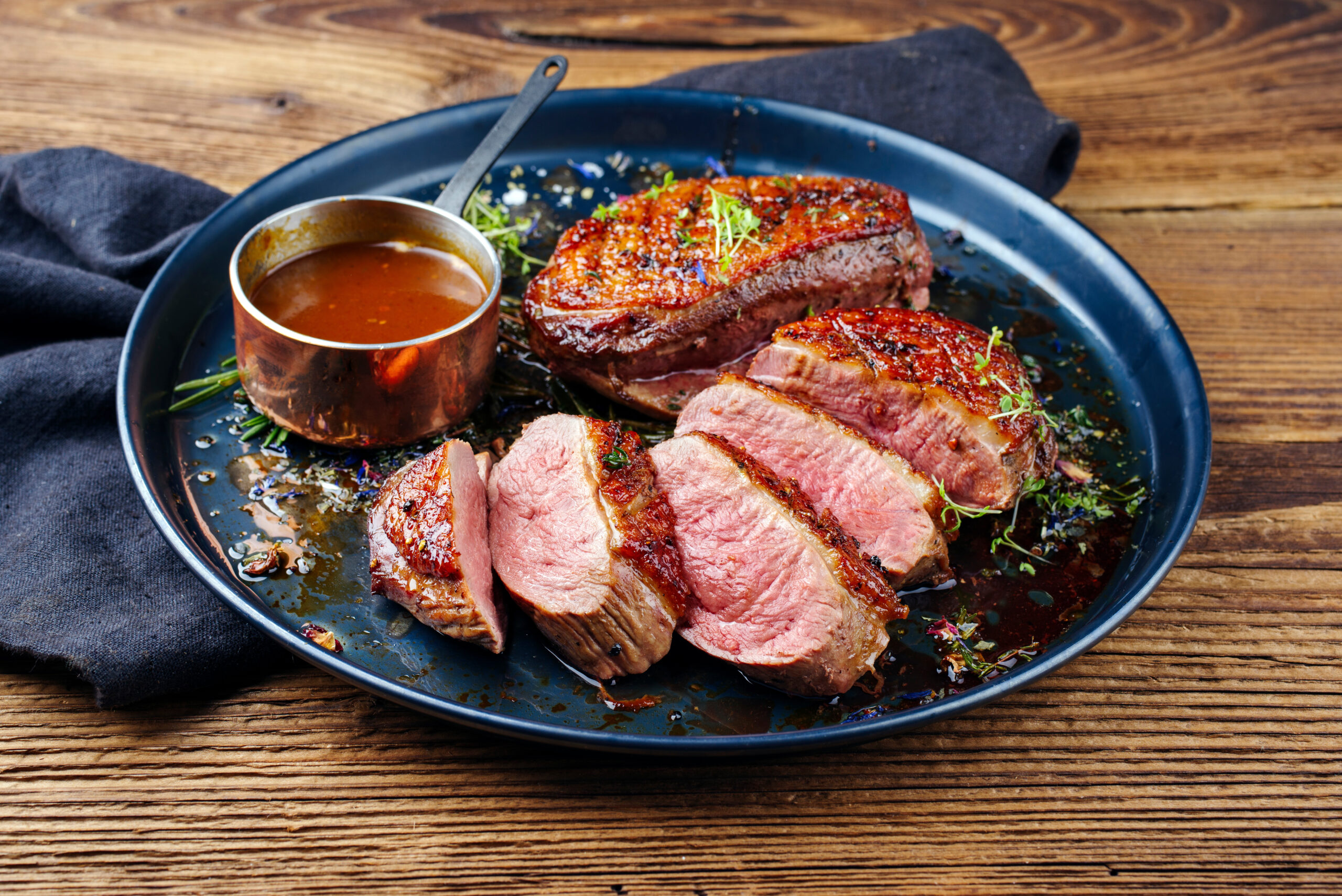
Instead, duck took over. Pork still rules, but exhibitors were sampling duck bacon, duck prosciutto, and duck sausage. As Restaurant Business put it, “duck is the new pig.” Goose charcuterie made an appearance, too. Add to that a steady drumbeat of specialty proteins — venison, ostrich, and beef cuts you’ve never heard of getting the spotlight treatment.
What this means for your menu copy:
Specialty proteins are an upsell story, but only if your menu does the heavy lifting. Most diners have never knowingly eaten duck bacon. If your menu just reads, “Duck Bacon BLT….. $18,” you’ve given them no reason to choose it over the regular BLT priced $4 less.
You need to do the same thing every good menu does for any unfamiliar item: tell them why it’s special without lying about it.
- Avoid: Duck Bacon BLT — house-made duck bacon, fresh tomato, crispy lettuce, brioche bun
- Better: Duck Bacon BLT — slow-cured duck bacon (smokier than pork, half the grease), heirloom tomato, butter lettuce, brioche
The rules from our post, Make Your Menu Less Boring, still apply: lead with the star, use one sensory adjective, drop the jargon. Specialty proteins make those rules even more important, because the upcharge needs justification.
One important warning: don’t claim health benefits you can’t back up. “Heart-healthier than pork” is the kind of phrase that gets restaurants in trouble with the FTC and the FDA. Stick to what you can honestly describe.
Trend #2: Global Flavors Get Specific (No More “Asian-Inspired”)
For years, menus papered over global influences with vague labels: “Asian-inspired sauce,” “Mediterranean spices,” “Latin flair.” The 2026 show signaled the death of that lazy shorthand.
Trend forecasters at the show pointed to specific dishes from specific places: Pambazo sandwiches and mole from Mexico, Marcona almonds from Spain, chimichurri from Latin America, avocado coffee from Vietnam, and frog legs from China. Horchata and churros — both flagged as breakout flavors of the year — anchored multiple FABI award winners.
Translation: diners are stepping away from fusion. They want the actual, authentic dish.
What this means for your menu copy:
If you’re putting global influences on your menu, name them properly. “Pambazo torta” beats “Mexican sandwich.” “Mole negro” beats “rich chocolate sauce.” Specificity signals respect and expertise. Vagueness signals you grabbed the trend off a buzzword list and might not be entirely sure about the dish itself.
Two practical guidelines:
- Don’t oversimplify the name but do explain the dish. Customers can read “Pambazo” — they just need to know what it is. Try: “Pambazo — Mexico City street sandwich on guajillo chile-soaked bread, chorizo and potato, queso fresco, topped with crema.”
- Watch your authenticity claims. The word “authentic” is increasingly under scrutiny. If you’re not making mole from a 25-ingredient family recipe, don’t claim “authentic mole” — call it “mole-style” or describe what’s actually in it. We’ve covered the over-promise trap in our Decoding Diner Expectations post. It applies double for global cuisines, where diners with cultural connection will absolutely notice when something’s off.
Trend #3: Functional Beverages Step Out of the Hippie Aisle
Beverages were everywhere at the show. Some you’d expect — the THC/CBD ready-to-drink category continues to bloom in legal states — but the bigger story was functional drinks promising to do something for health or disposition. Mood beverages, adaptogen sodas, and herbal refreshers with names like sage water, prickly pear, and yuzu were aimed squarely at restaurants, not the natural foods aisle. OSIA (as in ambrOSIA), one of the standout brands, sampled functional refreshers with clean labels and no added sugar.
The bev program is doing more than quenching thirst now; it’s part of the wellness offering. It’s also a margin opportunity — these drinks command $7–12 a glass and don’t require a sommelier.
What this means for your menu copy:
Functional beverages have a description challenge: the more interesting they get, the more carefully you have to write about them. The FDA strongly regulates claims about food and drinks improving health, mood, or bodily function. “Reduces stress” is a regulated claim. “Calms you down” is, too. Your menu shouldn’t say those things even if the brand’s own marketing does.
What you can do: describe ingredients, sensory profile, and origin. “L-theanine, lemon balm, and yuzu” is fine. “Made with adaptogens” is fine. “Designed to calm anxiety” is a nope.
This move is part of a larger transparency trend — diners want to know what’s actually in their food and drink. Functional beverages are an opportunity to be specific about ingredients without making promises you can’t keep. (Our recent post on allergen transparency covers the legal landscape on a related front.)
The Bottom Line
The 2026 NRA Show pointed at a menu landscape getting more specific, more global, and more functional. Specialty proteins, named global dishes, and beverages that do more than refresh aren’t novelties. They’re the next wave of premium offerings, and they all share one thing in common:
They require your menu to tell a better story than “Duck BLT….. $18”.
A great ingredient with a lazy description is a missed sale. The trends are the easy part. Translating them into menu copy that drives orders is the actual work.
Speaking of which: if your menu hasn’t caught up, that’s exactly what we do. Get your free menu audit. We’ll show you which descriptions are pulling their weight, and which are leaving money on the table.