In 2018, a missing comma cost a Maine dairy company $5 million in overtime payments. One tiny punctuation mark. Five. Million. American. Dollars.
The court case hinged on this sentence in Maine’s overtime law: “The canning, processing, preserving, freezing, drying, marketing, storing, packing for shipment or distribution of” agricultural products.
Notice what’s missing? A serial (or Oxford) comma after “shipment.” Without it, the court ruled that “packing for shipment or distribution” was a single activity, not two separate ones. Truck drivers who distributed products (but didn’t pack them) were entitled to overtime pay.
One missing comma. $5 million.
If grammar mistakes can cost multinational corporations millions, imagine what they’re costing your restaurant every single day.
Your Menu Is a Legal Document
Here’s something a lot of restaurant owners/managers don’t know: Your menu isn’t just marketing—it’s the document customers rely on when they place an order. Once you accept that order, every price and description on the menu becomes part of the contract. Typos and misleading claims can still invite lawsuits, health-department citations, and social media firestorms even before the first plate leaves the kitchen.
Let’s look at how grammar mistakes on restaurant menus translate into real financial consequences.
The Apostrophe Catastrophe: When Possessives Go Wrong
Menu Item: “Fresh Tomato’s and Basil Pizza – $16”
This innocent-looking apostrophe catastrophe tells customers that something belonging to the tomato is on your pizza. What belongs to the tomato? Nobody knows, but it sounds weird and wrong.
The Real Cost:
- Makes your restaurant look unprofessional and careless
- Suggests you don’t pay attention to details (including food safety)
- Costs credibility with educated customers who notice these things (ME!)
- Creates doubt about your overall quality standards (ALSO ME!)
The Fix: Apostrophes show possession or contractions, not plurals:
- “The tomato’s flavor” (possession)
- “It’s delicious” (contraction of “it is”)
- “Fresh tomatoes and basil” (plural, no apostrophe)
Annual Impact: If poor grammar causes just 5% of potential customers to choose a competitor, a restaurant doing $500,000 annually loses $25,000 in revenue. Every year.
The Comma Crisis: When Lists Attack
Menu Description: “Served with roasted potatoes sautéed mushrooms and seasonal vegetables”
This description has customers wondering: are the potatoes sautéed with mushrooms, or are these three separate items? The missing comma creates confusion about what they’re actually ordering.
The Legal Risk: Unclear menu descriptions can lead to customer complaints, refund demands, and even legal issues if someone has allergies. If your description suggests items are separate but they’re actually cooked together, you could be liable for allergic reactions.
The Fix: Use the Oxford comma consistently: “Served with roasted potatoes, sautéed mushrooms, and seasonal vegetables”
Now it’s crystal clear: three separate items, no confusion.
The Business Impact: Confused customers order less, complain more, and leave negative reviews. Clear descriptions lead to confident ordering and higher check averages.
The Modifier Muddle: When Words Attack the Wrong Target
Menu Description: “Grilled to perfection, our chef recommends the ribeye steak”
According to this sentence, your chef has been perfectly grilled. Probably not what you meant.
The Problem: Misplaced modifiers create unintentionally hilarious (and unprofessional) descriptions that make customers question your attention to detail.
The Fix: Make sure descriptive phrases modify the right noun: “Our chef recommends the ribeye steak, grilled to perfection”
Why This Matters: Every grammar mistake erodes customer confidence. Customers think: “If they can’t write a menu correctly, can they handle my food safely?”
The Capitalization Catastrophe
Menu Section: “appetizers and Small plates” Menu Item: “Pan-seared salmon With lemon butter”
Inconsistent capitalization makes your menu look like it was written by committee—a committee that never talked to each other.
The Professional Standard: Choose a capitalization style and stick to it religiously:
- Title Case: Pan-Seared Salmon with Lemon Butter
- Sentence Case: Pan-seared salmon with lemon butter
The Revenue Impact: Inconsistent formatting suggests inconsistent everything else. Professional presentation can justify premium pricing; amateur presentation forces you to compete on price alone.
The Spelling Disaster That Went Viral

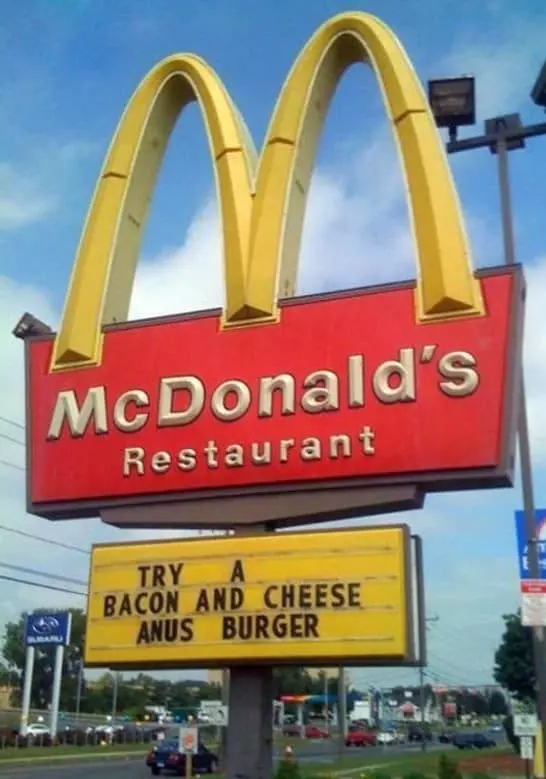
Fifteen years ago, McDonald’s made headlines for all the wrong reasons when tons of franchisors misspelled their new offering of Angus Burger (yup, you knew exactly where that went). The photos went viral on social media, generating thousands of shares. Definitely not the kind of publicity they wanted.
The Damage:
- Savage mockery on social media
- Permanent Google search results associating their name with poor spelling
- Lost credibility
The Lesson: In the age of social media, menu mistakes don’t stay local. One photo can make your restaurant a laughingstock across the internet.
The Allergy Liability Landmine
Dangerous Description: Contains nuts peanuts and dairy
This description could literally kill someone. Without proper punctuation, it’s unclear whether peanuts are separate from tree nuts, which matters enormously to people with specific allergies.
The Legal Exposure: Unclear allergy information can result in:
- Severe allergic reactions
- Lawsuits for medical expenses
- Criminal liability in extreme cases
- Health department violations and fines
- Insurance claims and premium increases
The Life-Saving Fix: Contains tree nuts, peanuts, and dairy
Clear, specific, and legally protective.
The Price List Precision Problem
Confusing Pricing: “Market Price*” Footnote: “*Prices subject to change”
This vague pricing strategy opens you up to customer disputes and payment problems.
The Legal Risk: “Market price” without clear guidelines can be considered deceptive pricing. If customers feel misled, you could face:
- Chargeback disputes
- Local consumer protection violations
- Bad online reviews that mention “surprise pricing”
The Solution: Be specific: “Fresh Atlantic lobster – price varies daily, please ask your server (typically $28–35)”
The Description Disaster: False Advertising
Menu Claim: “World’s Best Burger” Reality Check: Legally, this could be considered false advertising
The Problem: Superlative claims you can’t prove create legal liability. If customers feel misled, they can file complaints with consumer protection agencies.
Better Approach: Use specific, provable descriptions:
- “Our signature burger” instead of “world’s best”
- “Wildly popular ribeye steak” instead of “perfect ribeye”
- “House-made pasta” instead of “authentic Italian pasta” (unless it actually is, of course)
The Social Media Grammar Police
Every grammar mistake on your menu is a potential viral moment waiting to happen. Food bloggers; Google, TripAdvisor, and Yelp reviewers; and social media users love to photograph and share menu errors. Always have an outsider review your menu (preferably, us!).
The Reputation Cost: Once your grammar mistakes go viral, they become permanently associated with your restaurant in Google search results.
The Cost-Benefit Analysis
Professional Menu Proofreading: $150+
Potential Annual Revenue Loss from Grammar Mistakes: $10,000–50,000
Cost of Legal Issues from Unclear Descriptions: $5,000–500,000
Value of Professional Reputation: Priceless
The math is simple: Professional proofreading pays for itself with the first customer who chooses your restaurant because your menu looks professional.
The Grammar Audit Checklist
Review your menu for these expensive mistakes:
Apostrophe Errors:
□ Apostrophes in plural words (tomato’s, pizza’s)
□ Missing apostrophes in contractions (its vs. it’s)
□ Confused possessives (your vs. you’re)
Comma Problems:
□ Missing Oxford commas in lists
□ Comma splices joining complete sentences
□ Missing commas around descriptive phrases
Capitalization Issues:
□ Inconsistent title/sentence case
□ Random capital letters mid-sentence
□ Uncapitalized proper nouns
Spelling Disasters:
□ Misspelling common food words (Caesar, chipotle, bruschetta)
□ Your restaurant’s own name and signature dishes
□ Basic English words spell-check might miss
Clarity Problems:
□ Vague allergy information
□ Confusing price structures
□ Ambiguous descriptions that could mislead
The Professional Standard
Your menu represents your restaurant 24/7. It’s working even when you’re not there, making first impressions and setting expectations. Every grammar mistake undermines that work.
Professional restaurants have professionally written menus. It’s not about being fancy—it’s about being trustworthy. If your menu’s messy, what should I think about your kitchen?
The Bottom Line
That Maine dairy company learned an expensive lesson: Precision in language equals precision in business. Your restaurant’s grammar mistakes might not cost $10 million, but they’re costing you customers, credibility, and revenue every single day.
Grammar isn’t just about following rules—it’s about respecting your customers enough to communicate clearly and professionally. It’s about protecting your business from legal liability. It’s about building the kind of reputation that commands premium prices.
In a competitive industry where every detail matters, perfect grammar isn’t optional, it’s essential. The question isn’t whether you can afford professional proofreading. It’s whether you can afford not to have it.
Your menu is talking to customers right now. Make sure it’s saying what you want it to say. Get your free menu audit in 30 seconds.
We are not lawyers, and this is not legal advice.